
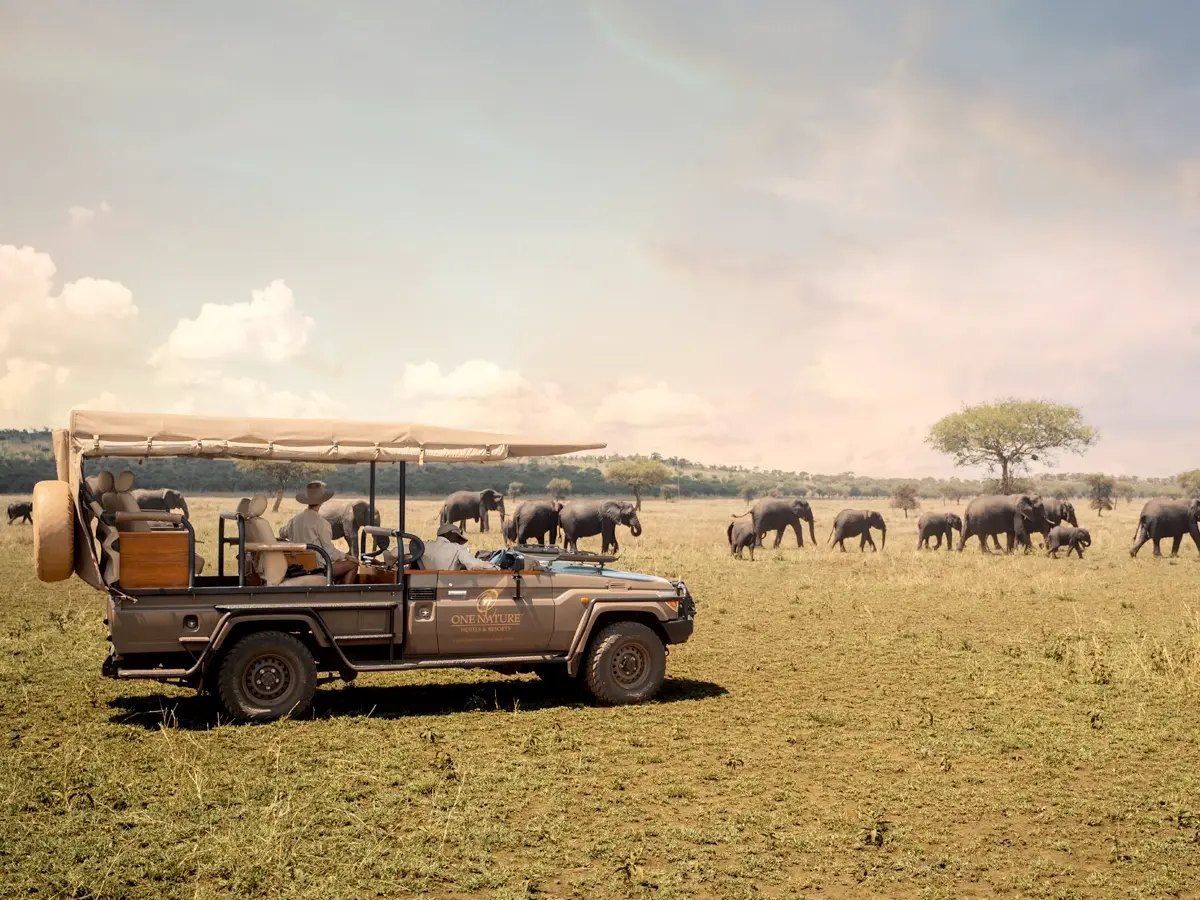
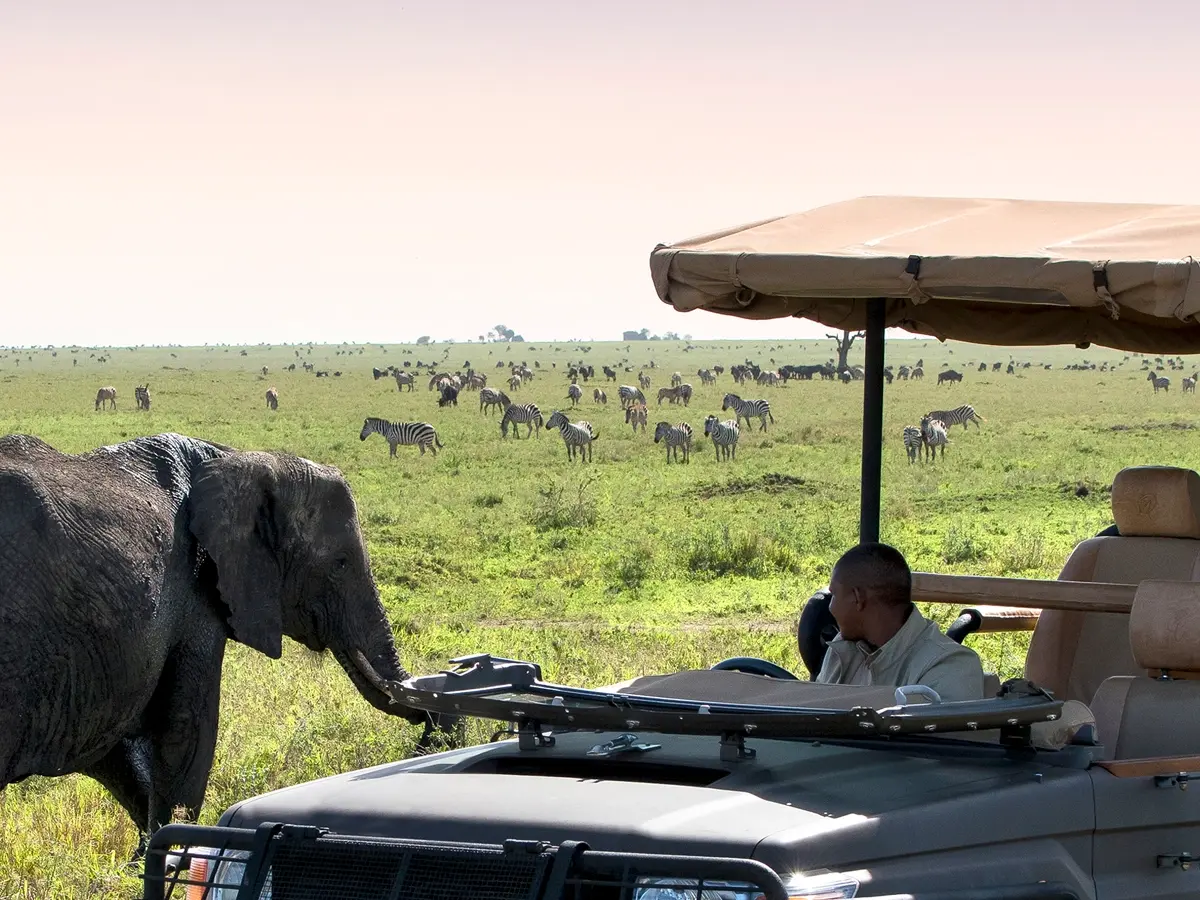

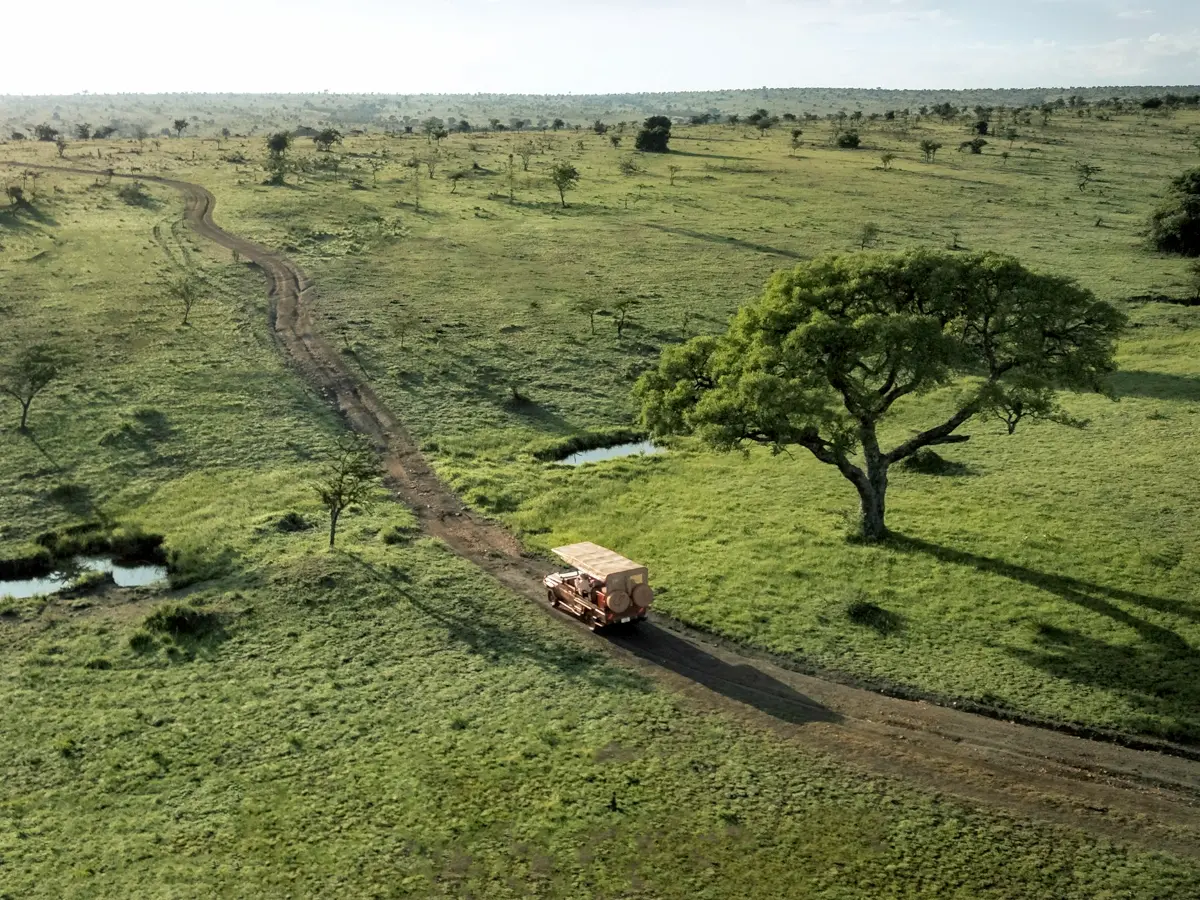
Some landscapes you visit; others you feel. The Serengeti National Park in Tanzania belongs firmly to the latter. At dawn, the endless plains appear to blend with the golden horizon. African lions stir around ancient granite kopjes, giraffes stroll casually between stand-alone acacia trees, and somewhere beyond sight, thousands of wildebeest may already be moving towards rain, water and fresh grass across one of Earth’s most celebrated wildernesses. By evening, the African savanna softens into amber as dinner is laid beneath an absorbing sky.
For travelers planning a luxury Tanzania safari, few names carry quite the same sense of wonder. But what is the Serengeti in Africa? Is it a national park, a savanna, a safari destination, or an entire ecosystem? Where is it located, how large is it, and why has it become one of the defining symbols of luxury African safari travel? Drawing on our experience in the Serengeti, our experts at One Nature have curated this guide to help our guests understand the landscape, wildlife, migration, and safari experiences that make Tanzania’s Serengeti so exceptional.
The Serengeti is home to Serengeti National Park, Tanzania’s first national park and one of Africa’s most important protected wildlife landscapes (1). It is part of a much larger transboundary ecosystem stretching towards Kenya’s Maasai Mara. The park became a UNESCO World Heritage Site in 1981, recognized for its exceptional biodiversity, predator-prey relationships and extraordinary annual wildlife migration (2).
The Serengeti is open grassland, wooded savanna, rivers, granite kopjes, predators and prey, immense silence, sudden drama and enormous skies, creating a landscape large enough for the African wildlife to move according to rainfall, grazing and instinct rather than human boundaries.
| Serengeti Fact | What to Know |
|---|---|
| Country | Tanzania |
| Location | Northern Tanzania |
| National Park Size | ≈ 5,700 square miles |
| Wider Ecosystem | ≈ 11,500 square miles |
| UNESCO Status | World Heritage Site since 1981 |
| Landscape | Savannah, grasslands, kopjes, woodland and riverine habitats |
| Signature Spectacle | The Great Migration |
| Iconic Big 5 Wildlife | Lion, leopard, elephant, buffalo, rhino |
| Central Safari Region | Seronera |
| Northern Landmark | Mara River |
| One Nature Locations | Central Serengeti & Northern Serengeti |
Facts can explain what the Serengeti is. They cannot fully explain what it feels like to be there. At One Nature, the wilderness remains the protagonist. The first light spreading across the plains. A lion’s call somewhere beyond your tent. Dust rising behind a herd. The sudden silence of watching African elephants pass from your private deck. Dinner beneath a sky so clear that the Milky Way seems almost within reach.
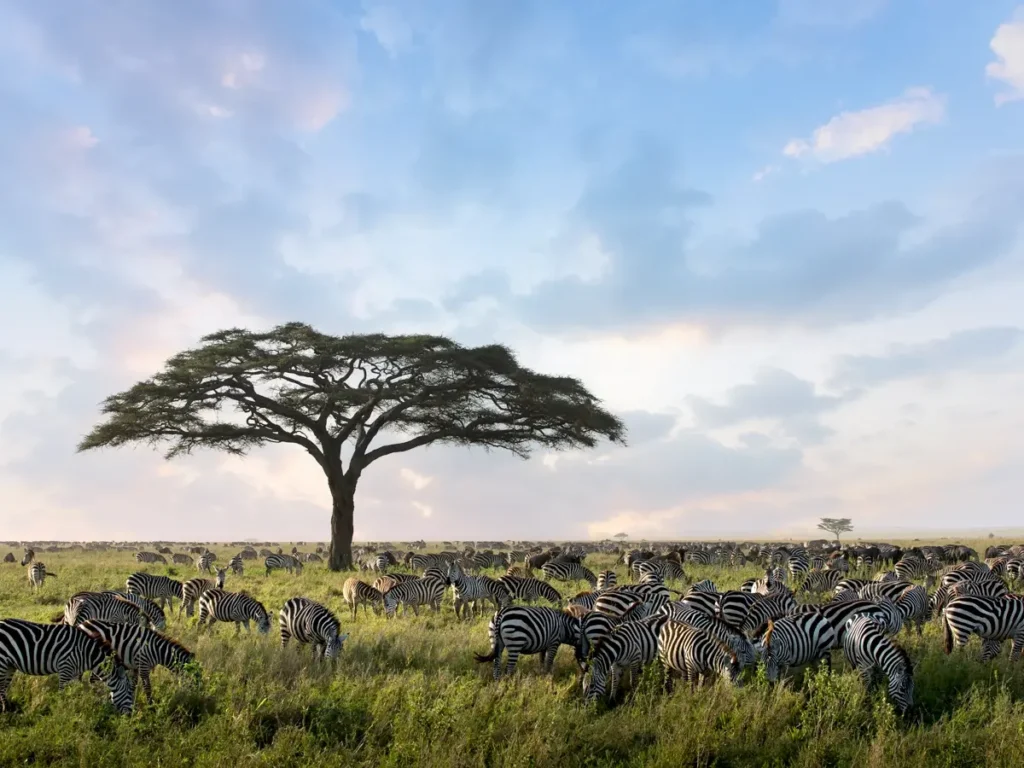 The Endless Plains of the Serengeti | One Nature
Serengeti gets its name from the Maasai word Siringet, meaning “wide endless plain” (1). Stand on the open grasslands and the horizon appears to dissolve into the sky. Grass ripples into the distance, broken only by occasional acacias, wildlife or granite kopjes. That feeling of immeasurable space explains why the phrase “endless plains” for Serengeti immediately makes sense.
The meaning of Serengeti is almost poetic enough to describe the landscape on its own. The simplest definition of Serengeti is a massive East African wilderness where the land seems to run forever for a soulful journey to wellbeing.
Serengeti National Park is in Tanzania, Africa, and forms the core of the broader Serengeti-Mara ecosystem. It lies in the north of the country, adjoining the wider Serengeti ecosystem and extends across a mosaic of parks, conservation areas and reserves in Tanzania, continuing across the international border into Kenya’s Maasai Mara. If you are wondering which country the Serengeti is in, the answer is principally Tanzania.
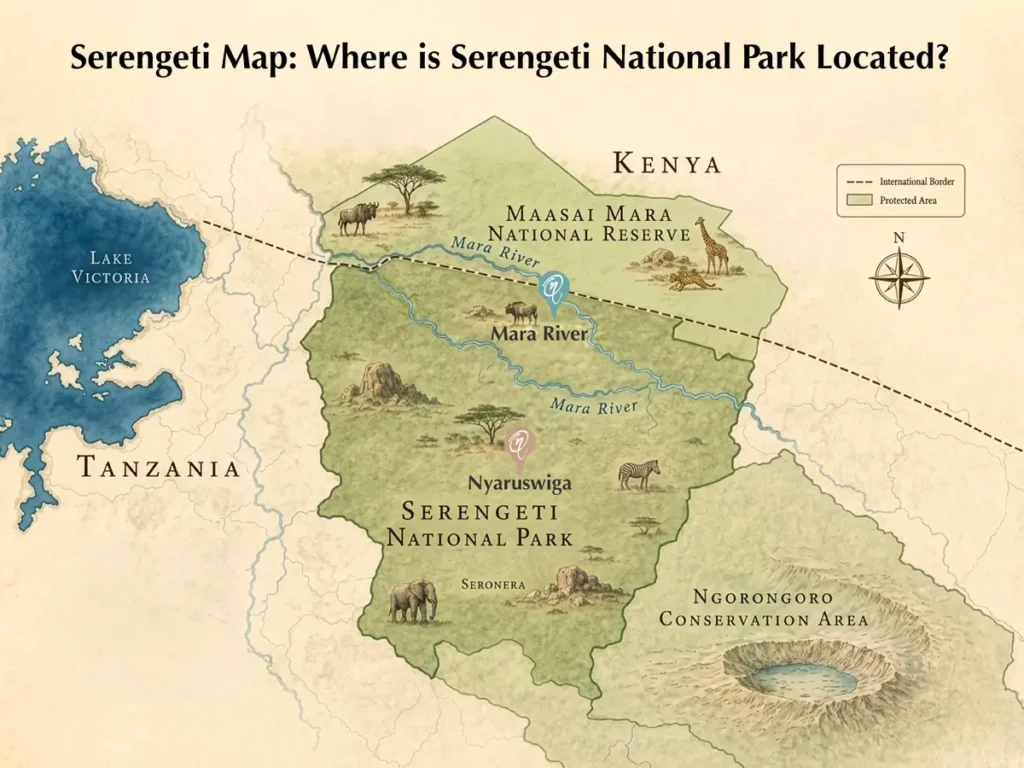 Serengeti Map, Tanzania
When locating Serengeti on the map of Africa, look towards northern Tanzania.
For guests staying with One Nature, this geography becomes especially meaningful. Travel from center to north and the landscape can change from vast short-grass plains to river valleys, rocky outcrops and open woodland.
Serengeti National Park covers approximately 5,700 square miles (2). It is the protected heart of a much larger Serengeti-Mara ecosystem of approximately 11,500 square miles, an interconnected wilderness that allows wildlife to move over enormous distances (2).
To understand this scale, think beyond a single wildlife reserve because the Serengeti’s defining story is movement. Wildebeest need space to migrate. Predators follow concentrations of prey. African elephants move between water and feeding grounds.
Seasonal rainfall transforms different corners of the landscape at different times. This freedom of movement is one reason a luxury Serengeti safari feels fundamentally different from wildlife experiences in smaller reserves. You are entering an ecosystem, not simply visiting an enclosure around wildlife!
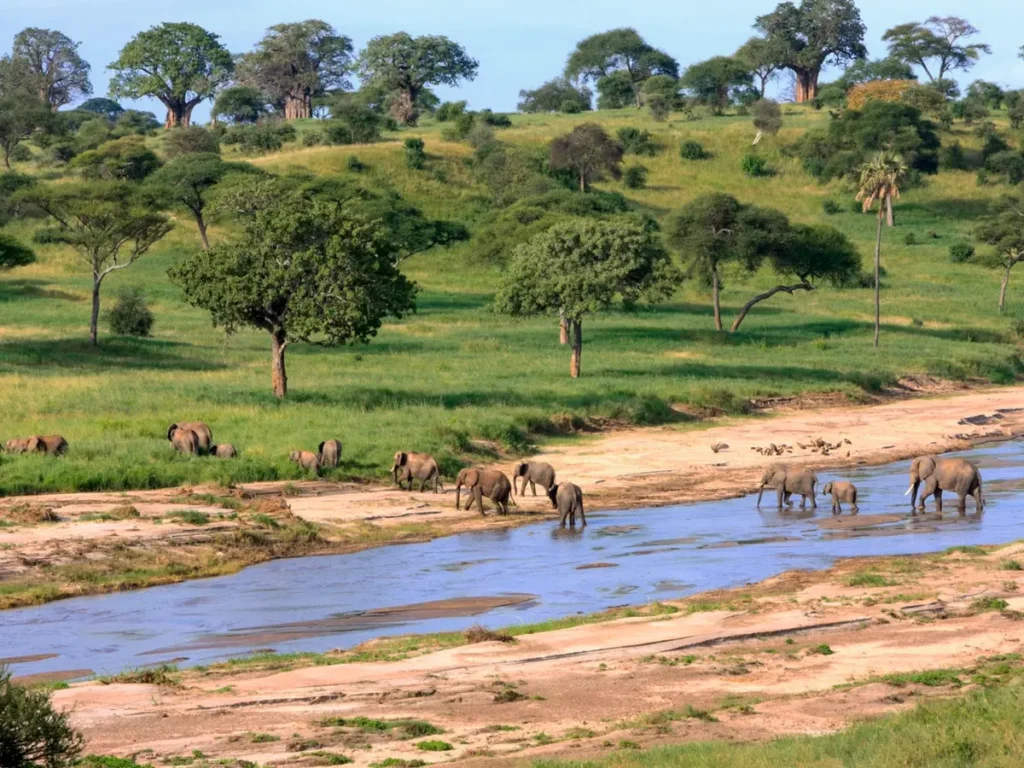 Meet the African Elephant Families of the Serengeti | One Nature
Yes, but describing it simply as savanna understates its ecological variety. Much of the Serengeti in Tanzania consists of open savanna and grassland, particularly the famous plains (3). Yet, it encompasses a broader mosaic of aquatic and terrestrial habitats shaped by rainfall, geology, soil and drainage (2).
The Serengeti National Park landscapes include:
| Short Grass Plains and Acacias | Wetlands |
| Riverine Forests and Woodlands | Rocky Kopjes |
| Seasonal Waterways | Rolling Northern Hills |
The southern plains create the quintessential Serengeti panorama: low grass, enormous skies and almost uninterrupted horizons. Central Serengeti becomes more varied around Seronera, where rivers and kopjes create exceptional year-round wildlife habitat. Farther north, woodland and hills lead towards the Mara River.
So, what is the Serengeti plain? It is the iconic open-grassland face of a much more complex living ecosystem. At One Nature, this diversity becomes part of the safari itself, with each landscape revealing a different rhythm of wildlife and wilderness.
Ancient geological forces helped shape the Serengeti as seen today. Volcanic ash deposited across parts of the southern plains contributed to mineral-rich soils and highly productive grasslands, while rocky outcrops known as kopjes punctuate the otherwise open landscape (2).
Today, these geological islands have become miniature wildlife habitats. Lions stretch across their warm surfaces. Leopards may shelter among the rocks. Smaller creatures disappear into cracks and vegetation.
Did You Know?The Serengeti’s famously productive grasslands are partly linked to volcanic soils, helping sustain the extraordinary concentrations of grazing animals that move through the ecosystem. Learn more from our guide to the geological wonders of the Serengeti. |
The Serengeti National Park is known for the Great Migration, exceptional predator populations, Big Five wildlife, open savanna landscapes, kopjes and outstanding year-round game viewing. No wonder the park is considered Africa’s best safari destination and why you should visit it.
The Serengeti is primarily famous for:
The Great MigrationA vast annual movement of wildebeest, zebra and gazelle following seasonal pasture and water. |
The Big 5 AnimalsLion, leopard, elephant, buffalo and black rhino are all present within the Serengeti. |
Exceptional PredatorsLion, leopard, cheetah and spotted hyena inhabit dramatic predator-prey interactions. |
Remarkable LandscapesOpen plains, rivers, woodland and kopjes create constantly changing safari scenery. |
Signature Safari ExperiencesPrivate game drives, balloon safaris and intimate bush dining. |
Year-Round WildlifeThe migration moves, but resident wildlife remains. A luxury Serengeti safari is never dependent on one spectacle alone. |
Rare & Endangered AnimalsLook for black rhino, African elephant, wild dog, cheetah, and other conservation-sensitive species. |
Culture & CommunityMeaningful encounters that reveal the people and traditions surrounding the Serengeti. |
Luxury StaysOne Nature Nyaruswiga and One Nature Mara River pair wilderness with refined comfort and privacy. |
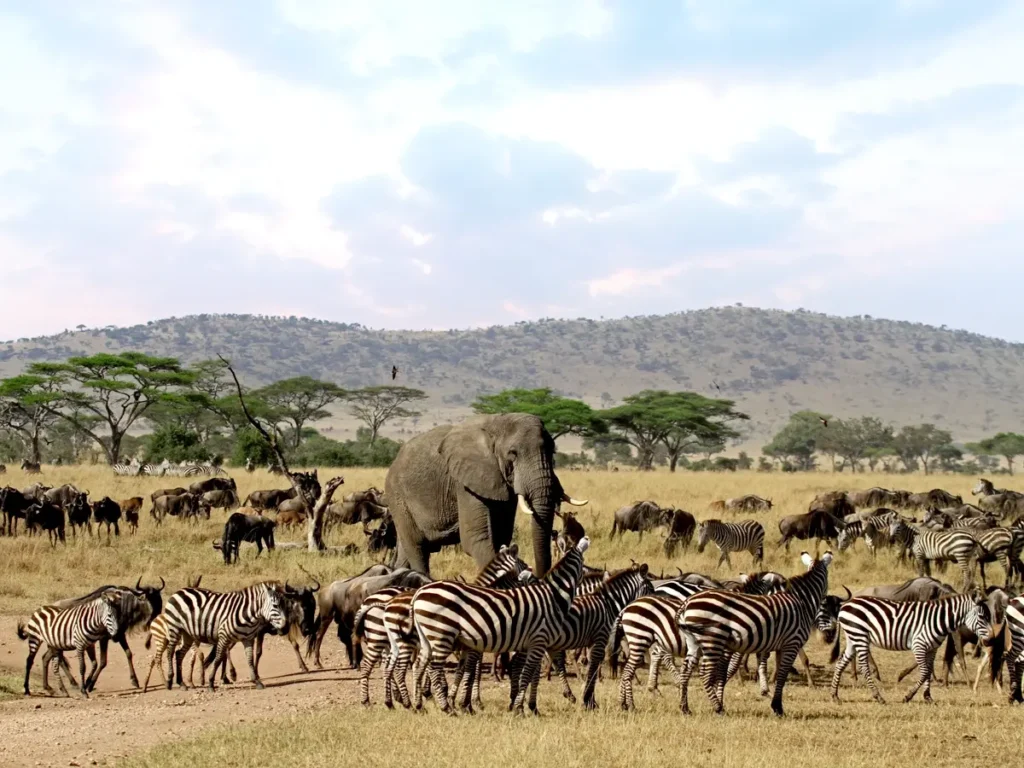 The Serengeti is Home to Exotic Wildlife Species | One Nature
The Serengeti supports an extraordinary variety of wildlife.
Among the Serengeti animals, travelers may encounter:
| Wildebeest | Zebra | Lion | Leopard |
| Cheetah | Elephant | Black Rhinoceros | Giraffe |
| Hippopotamus | Crocodile | Spotted Hyena | Topi |
| Gazelle | Eland | Warthog | Numerous Smaller Species |
Check our list of top ten animals to see in the Serengeti with rare insights and tips. For guests on a luxury Tanzania safari, however, the finest encounters are rarely about ticking species from a list. It may instead be a lioness grooming her cubs beside a kopje, elephants crossing quietly at sunset, or a leopard slipping through golden grass as your guide switches off the vehicle and allows silence to take over. To some, it is thrilling to decipher the animal pattern secrets, while to others, understanding community and wildlife conservation in the Serengeti is most rewarding.
The Great Migration Serengeti is an enormous, continuous movement of wildlife through the Serengeti-Mara ecosystem, driven largely by rainfall, water and fresh grazing. It is a cycle involving around two million wildebeest plus hundreds of thousands of zebras and gazelles. It also describes the annual circular journey as stretching roughly 620 miles across Tanzania and Kenya (2). This is what makes the Serengeti migration so different from an ordinary wildlife gathering.
The landscape itself appears to move. Thousands of dark bodies stream across grassland. Dust rises, calves keep close to mothers, and predators shadow the edges. At river crossings, hesitation can suddenly give way to extraordinary momentum.
The Serengeti migration does not happen on one date or at one location. River crossings are spectacular, but nature provides no appointments. Herd movements shift with rainfall, and crossings can never responsibly be guaranteed for a particular hour or day. To dive deeper, read our guide to where and when to see the great migration.
The Serengeti is a year-round safari destination, but the best time depends on what you want to see. For classic dry-season wildlife viewing, June through October is particularly rewarding. Vegetation becomes less dense, wildlife concentrates around key water sources, and the migration moves through western and northern regions. For a greener, softer Serengeti, the months after the rains can be equally seductive.
The crucial point is that what is the best time to visit the Serengeti has no single correct answer. A lion does not migrate to Kenya because it is August. Elephants, giraffes, leopards and countless other animals continue inhabiting different regions throughout the year. Sometimes the quieter months reveal a more intimate Serengeti.
One Nature Tip:Choose your Serengeti season around the experience you value most, then let One Nature curate the right location, safari rhythm and bespoke activities around it. Planning for the Serengeti during the festive season or for a luxury honeymoon can also be a great idea. Many of our guests come to celebrate milestones like anniversaries and special occasions in the Serengeti. |
| Your Travel Interest | Consider |
|---|---|
| Dry-season wildlife viewing | June to October |
| Northern migration and possible river crossings | July to October |
| Calving and predator activity | January to March |
| Green landscapes and photography | November to May |
| More private and secluded safari experience | April to May & November |
| Resident big cats and wildlife | Year-round |
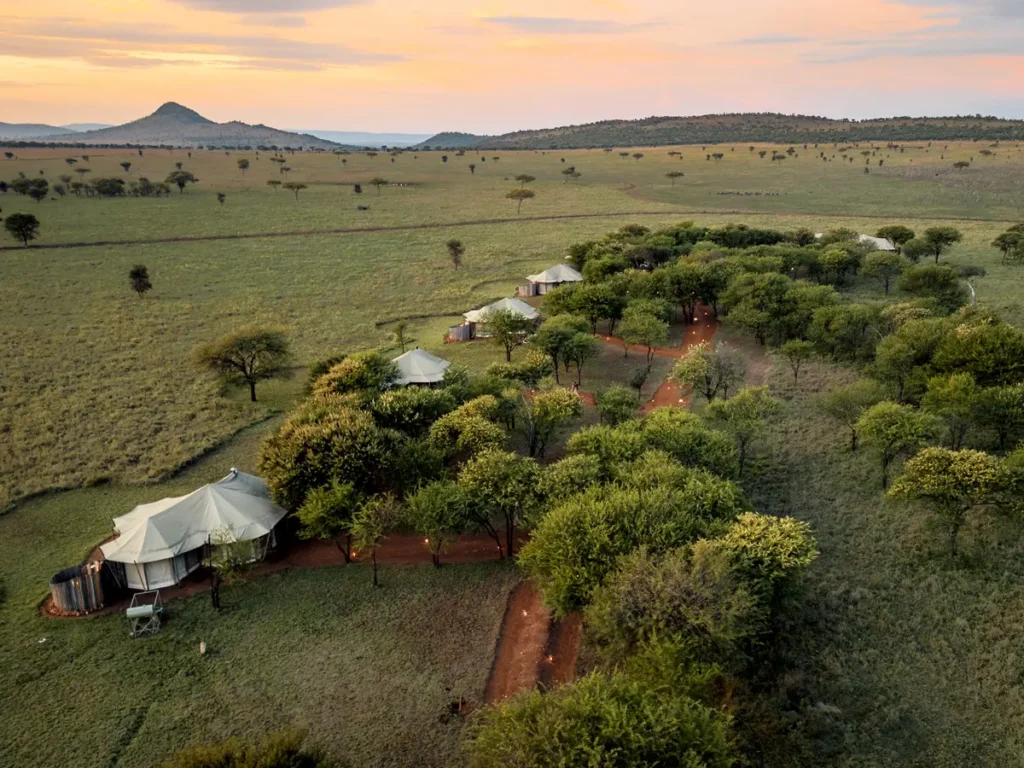 Luxury Stays in Serengeti’s Sweeping Savannas | One Nature
You can understand the Serengeti through maps, numbers and migration charts. Then you arrive, and it becomes a feeling. At One Nature, we believe the Serengeti should be experienced with the same depth and sensitivity with which nature has created it. From One Nature Nyaruswiga in Central Serengeti to One Nature Mara River in the north, every stay is designed to place guests close to the rhythms of the landscape while surrounding them with privacy, intuitive service and uncompromising comfort.
For couples, families and seasoned safari travelers, a luxury Tanzania safari becomes more than a sequence of game drives. It becomes a space to reconnect, wonder, indulge and experience Africa at its most elemental. After all, the finest luxury Serengeti safari should not merely show you the endless plains; it should allow you to feel part of them.
Come experience the Serengeti with One Nature, and let the wild stay with you long after you return home.